The Engaged Scholar Spring 2026
Community Engaged Learning: High-Impact Learning for Cougs
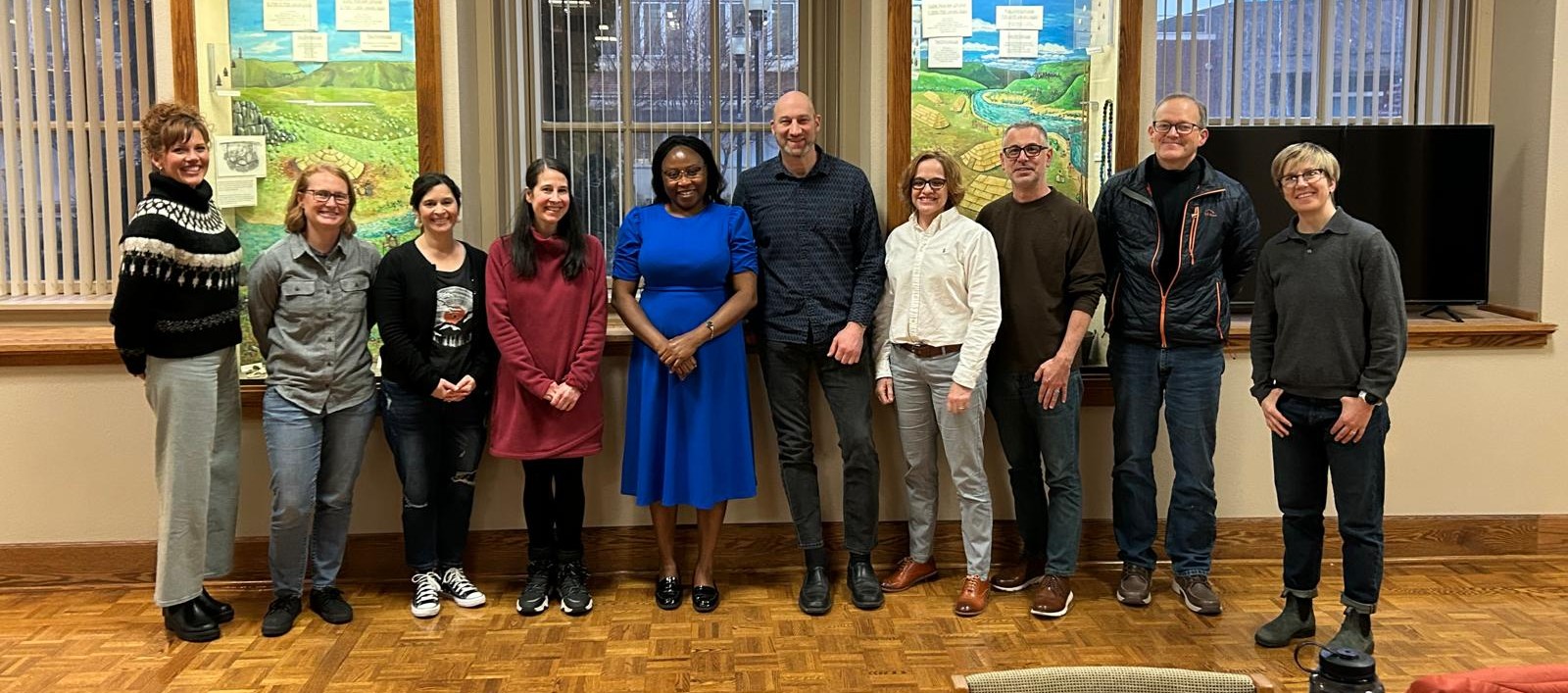
It has been a busy semester for the WSU Center for Civic Engagement! The CCE facilitated a Community Engaged Scholars professional development workshop with 6 faculty members from Pullman, Vancouver, and Tri-Cities (pictured above), two students showcased service-learning at SURCA by presenting two posters (view the Impact of Service-Learning and Service-Learning in WSU Global Human Development Course) , and 5 faculty members were recognized with the Partners in Innovation Award from the Office of the Provost and the CCE.
Looking ahead, on April 27th from 9–11 a.m., the CCE will host the 5th Annual Community Engagement Summit on Zoom. Please register for the event to learn more about WSU’s continued progress following the university’s successful Carnegie Community Engagement Classification.
The WSU Center for Civic Engagement (CCE) exists to help students achieve one of the most meaningful experiences of the Coug Experience: community engagement. Service-learning empowers undergraduate students to apply classroom knowledge to real-world community challenges, building interpersonal skills and a sense of social responsibility that extends far beyond graduation. This spring, the CCE collaborated with 88 faculty and staff across Pullman, Global, Tri Cities, Vancouver, and Spokane Health Sciences, resulting in over 2,800 students in 106 courses and 3 co-curricular programs who were actively engaged in community-engaged learning in a variety of ways. 58% of students in service-learning courses were first-generation and 21% were first-year students.
PCEI Solar Heater
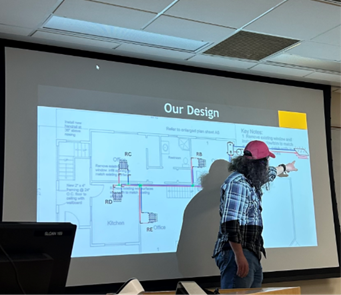
Students in Jonathan Steffen's Mechanical Engineering 405: Thermodynamics course partnered with the Palouse-Clearwater Environmental Institute (PCEI) to take on a real-world engineering challenge. Working with a donated solar heater, student teams were tasked with designing a complete solar heating system for PCEI's headquarters in Moscow, Idaho, including all system components, installation cost estimates, and a projected savings analysis.
Adopt-a-School
The CCE's Adopt-a-School program with Pullman School District is thriving! What began as a requirement for Teaching and Learning 301 students to complete five hours of Pre-K-12th grade classroom experience has expanded to include five additional Teaching and Learning courses, giving more opportunities to our future educators to gain the hands-on experience they need as they prepare to enter the profession.
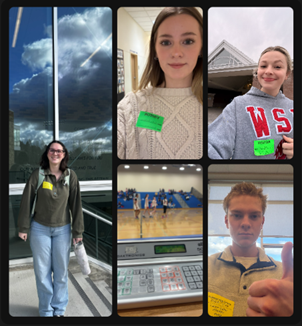
This spring, teachers at Jefferson Elementary, Kamiak Elementary, Sunnyside Elementary, Lincoln Middle School, and Pullman High School generously opened their classrooms to WSU Teaching and Learning students. Volunteers supported K-12 learners in a variety of meaningful ways, including leading small reading and math groups, assisting with science labs, providing tutoring, and working one-on-one with special education students. At Lincoln Middle School and Pullman High School, WSU students volunteered at sporting events, including basketball games, wrestling meets, and track competitions.
Over the course of Spring 2026, more than 100 WSU students contributed over 215 volunteer hours across Pullman School District, a testament to the strength of this growing partnership between WSU and the broader Pullman community.
Building Capacity Through Community Partnerships
Greek Week
WSU Greek Week is a collaboration among the Center for Civic Engagement, Center for Fraternity and Sorority Life, Interfraternity Council (IFC), Panhellenic Council, and Multicultural Greek Council (MGC) for an annual spring celebration centered on community, collaboration, and community service. Throughout the week, students participated in philanthropy events, chapter competitions, and hands-on volunteer projects that extended beyond campus and into the Pullman community. Greek Week continues to be a strong example of how collective action can strengthen community relationships while creating tangible local impact. Learn more about the impact.
Koppel Farm
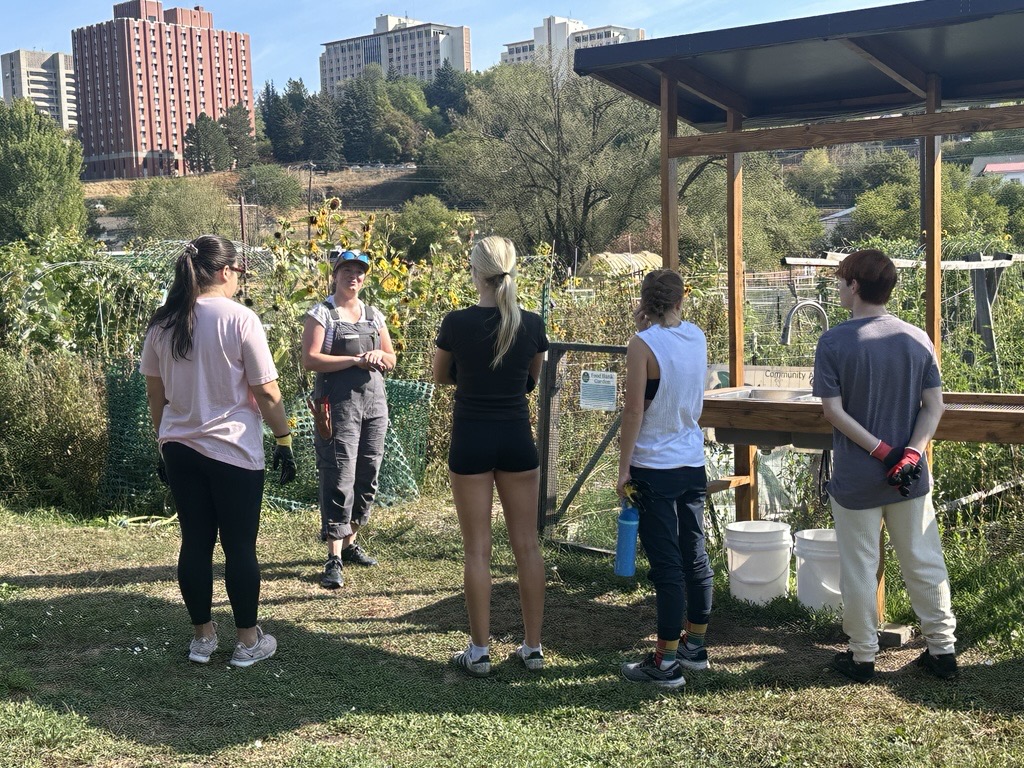
Pullman Community Garden at Koppel Farm, a long-standing nonprofit dedicated to food security, sustainability, and community connection. Founded in the early 1990s, the garden serves around 100 households through organic garden plots while also supporting broader food access efforts across Whitman County. A particularly meaningful partnership is their work with the Community Action Center, which uses dedicated food bank plots to grow fresh produce for community members experiencing food insecurity. Beyond food production, the garden serves as a hub for environmental education, gardening workshops, and family-friendly learning opportunities through partnerships with organizations like the Palouse Conservation District. As a green space in the heart of Pullman, Koppel Farm continues to demonstrate how community partnerships can grow food, learning, and belonging all in one place.

Human Development 403: Families in Poverty (WSU Global), taught by Jennifer Putney, integrates service-learning as a high-impact practice that connects students with community organizations supporting families experiencing poverty. This service-learning project was presented as part of the 2026 Showcase for Undergraduate Research and Creative Activities (SURCA) on March 23, 2026. In this fully online course, students complete at least 10 volunteer hours and create meaningful deliverables—such as infographics, resource guides, and outreach materials—based on real community needs, with support from the Center for Civic Engagement. Through these experiences, students build professional skills and apply course concepts while contributing valuable resources that benefit both community partners and the broader field of human development.
WSU Health Sciences
Washington State University and Spokane Public Schools have partnered to open the community‑based Logan Family Clinic at Logan Elementary School in Spokane, increasing access to primary health care for students, families, and residents while reducing common barriers such as transportation and scheduling challenges. The clinic, staffed by WSU College of Nursing and Medicine faculty and offering services for all ages, represents a first‑of‑its‑kind collaborative effort to bring family‑friendly health care directly into a neighborhood school.
Washington State University’s Little Birds program introduces Native elementary school students in Eastern Washington to health‑care careers through culturally grounded, hands‑on experiences led by WSU health sciences students to inspire early interest and confidence in fields like medicine, nursing, and pharmacy.
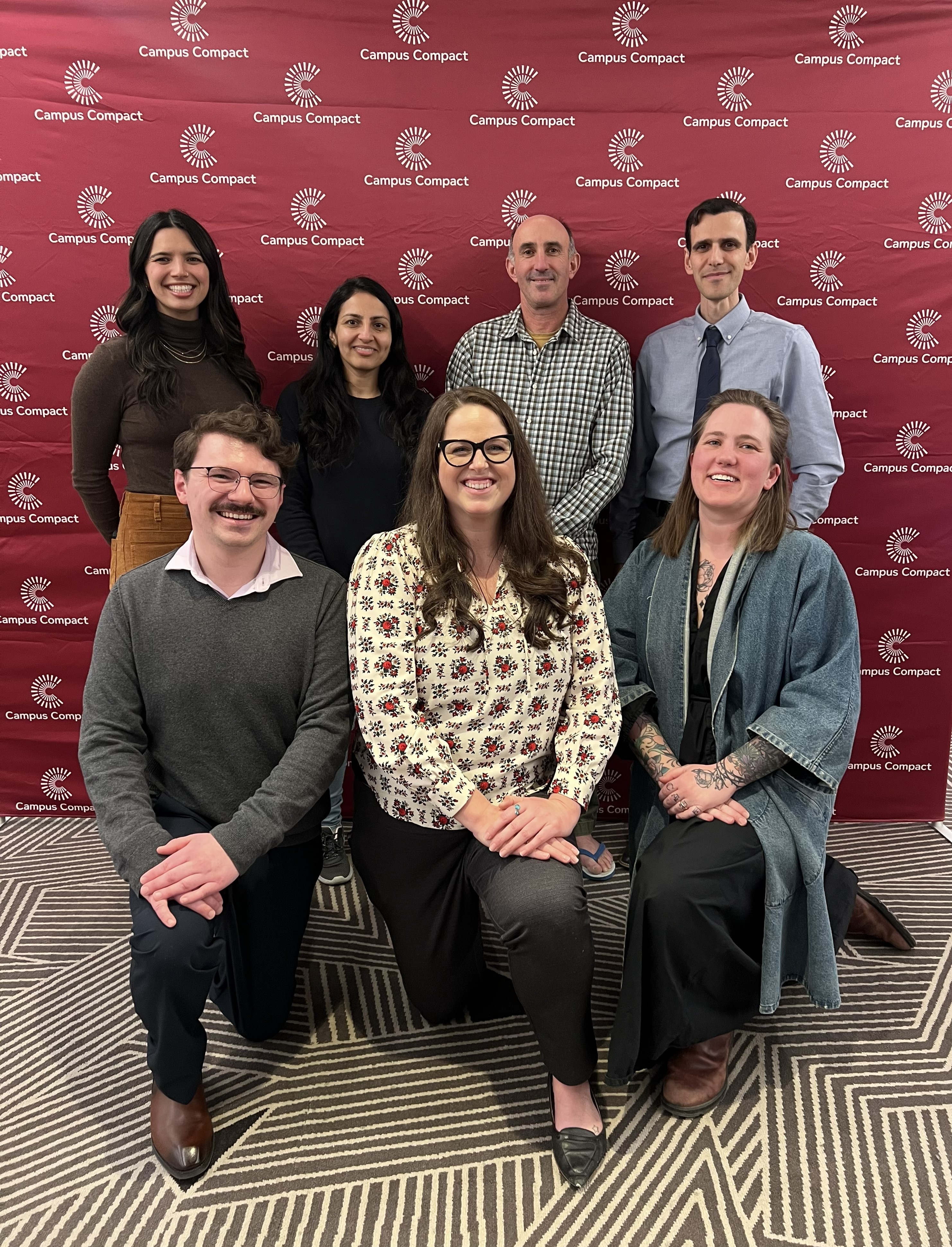
Seven faculty from WSU Vancouver presented posters at the Compact26 Conference, Hope Found Here: Advancing Civic and Community Engagement through Compassion, Action & Unity in Chicago, Illinois in March. Campus Compact is a national coalition of colleges and universities committed to advancing the public purposes of higher education through civic and community engagement focused on strengthening service-learning, community partnerships, and student civic participation across campuses.
Michael Berger, Community engagement in a first-year STEM course: student success and demographic impacts
Eight years of data from an introductory environmental science course show that students who chose community engagement projects achieved higher grades and improved success outcomes compared to those who completed a research-based writing assignment.
Josey Sechrist and Aref Majdara, Bridging Campus and Community in SW Washington: Strengthening STEM Pathways Through MESA Mentorship
The MESA Mentor Program at Washington State University Vancouver demonstrates how campus-community partnerships can enhance STEM pathways by improving technical skills, fostering civic responsibility, and increasing a sense of purpose among both university mentors and K–12 students.
Caitlin Bletscher, Capturing the Critical Lens: Developing Alternative Assessment Tools for Service Learning Impact
A pilot evaluation of Critical Service-Learning highlights the need for improved assessment tools to better capture student civic growth, learning outcomes, and the overall impact of community-engaged classroom practices.
Gunjan Gakhar and Ryan Watson, Microbial Connections: Campus-Community Partnerships Through Fermented Foods
Presenting a course-based community-engaged project connecting WSUV, local high schools (including Title I), and fermented food companies to teach gut microbiome concepts through hands-on activities, low-cost demonstrations, and strategies for assessment, equity, and engaging diverse learners.
Johanna Phelps, Impact of Faculty Development on Student Outcomes in Community-Engaged Courses Across Disciplines
This poster demonstrates that sustained faculty development and reflective practice in community engagement, combined with shifting institutional narratives, enhance student learning and reduce resistance to community-engaged learning, as shown by multi-semester, IRB-approved assessment data from upper-division courses.
Engagement News & Awards
Solar Schools is a Washington State University–led program helping rural Washington schools install solar energy systems to reduce costs and reinvest savings into student opportunities while promoting clean energy education and community benefits.
WSU Vancouver students in Bamboo Chen’s International Business 435 class partnered with Visit Vancouver to create real-world tourism strategies, identifying new events and marketing ideas to enhance Vancouver’s appeal as a travel destination.
WSU Pullman engineering students helped design and build a protective awning for the Disability Action Center in Moscow as a real‑world, community‑engaged project that applied classroom skills to support accessibility and shelter for people with disabilities, providing a meaningful application of engineering concepts while giving students the opportunity to learn about universal design and accessibility.
WSU's UCORE Lunch & Learn series featured a panel of faculty who incorporate service-learning in UCORE and other courses, moderated by Allison Rockwell, Service-Learning Coordinator. The faculty shared their perspectives and experiences with service-learning as a high-impact practice and discussed their collaboration with the Center for Civic Engagement.
Amanda Robinson, CCE Community Partnerships Coordinator, led a presentation at the Social Change Symposium in Portland, OR. The presentation was based on the principles and practices of anti-racist community engagement and the various ways saviorism, charity, and the idea of “giving back” to the community sets up unequal ideas about power in our community work.

Awards
Abby Toro, CCE Project Leader, won a Distinguished Leader Award
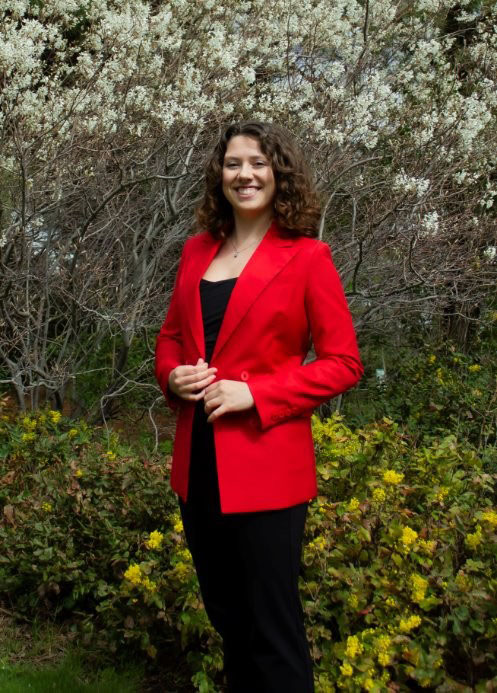
Isabella Boback, CCE Project Leader, won a Distinguished Leader Award
Elias Silva, AmeriCorps staff at the Cougar Food Pantry, won a Provost’s Award for Leadership
Kaylee Hoffmann and Bella Boback, CCE Project Leaders, were nominated for an ASCC Student Employee of the Year Award
Sofia Forslund, CCE Project Leader, won an ASCC Employee of the Year Award in the Social Impact and Belonging Category
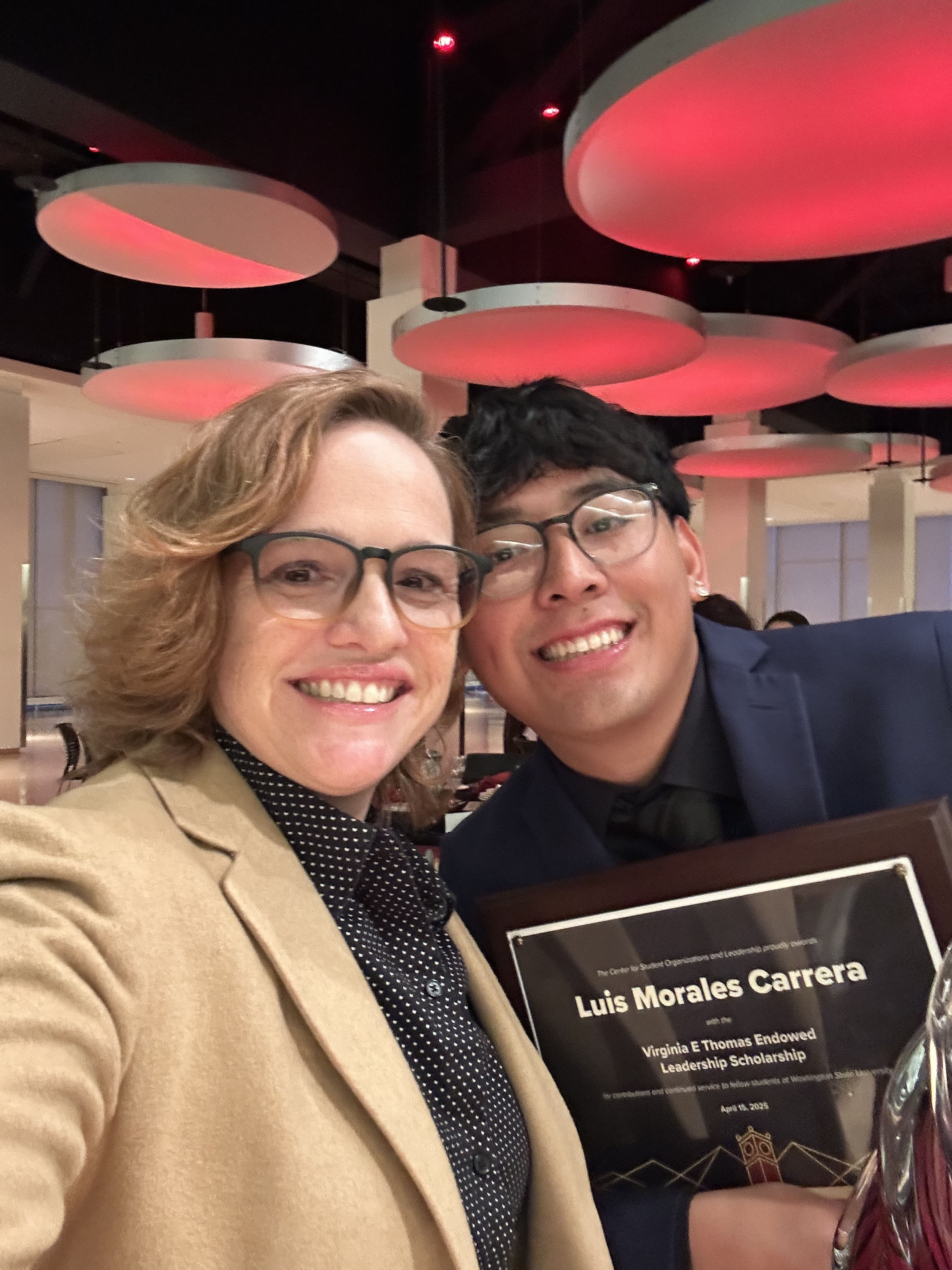
Luis Eduardo Morales Carrera, CCE Academic Peer Mentor, won a Provost Award for Leadership, The Virginia E. Thomas Endowed Scholarship, and ASCC Student Employee of the Year award in the Community Service Category. Luis was nominated for his outstanding work as the founding and current executive director of Project Erase, a nonprofit that provides school supplies to support elementary students in Guatemala.
Aunjelique Anderson, WSU Global undergraduate student, received the 2026 Leader of Distinction award in the undergraduate category from the President's Commission on the Status of Women, Top 10 Senior Award, and Global Chancellor’s Award for Leadership. A full-time Media Innovation student maintaining a 3.8 GPA while balancing caregiving and foster parenting, Aunjelique demonstrates extraordinary resilience and leadership by supporting student parents, mentoring families affected by addiction, and creating meaningful community impact through advocacy, volunteerism, and student engagement.
Audrey Elliott won the President’s Award for Leadership and Top 10 Senior Award in the community service category. Audrey is an Honors College student and earned the Mindfulness Emotional Social Intelligence (MESI) Certificate. She exemplifies academic excellence, compassionate leadership, and sustained community service, contributing nearly 280 volunteer hours, leading WSU’s largest student club, and engaging in initiatives that promote environmental justice, mental health, and inclusive campus culture while preparing for a future in advocacy and public service.
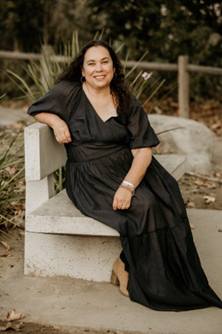
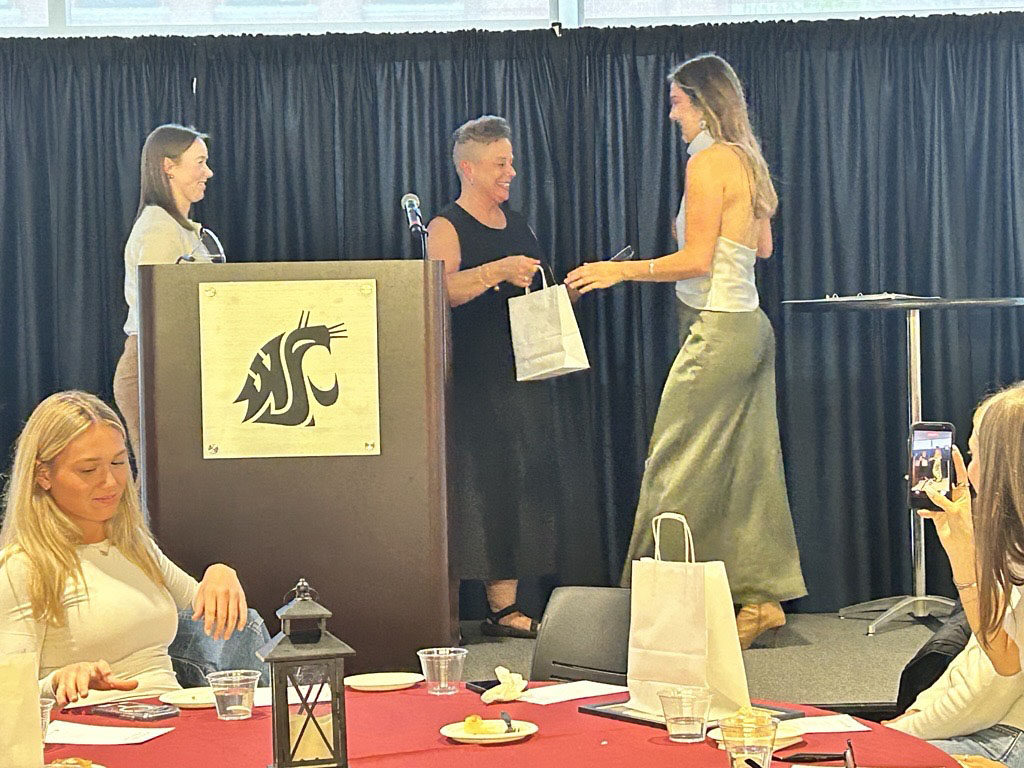
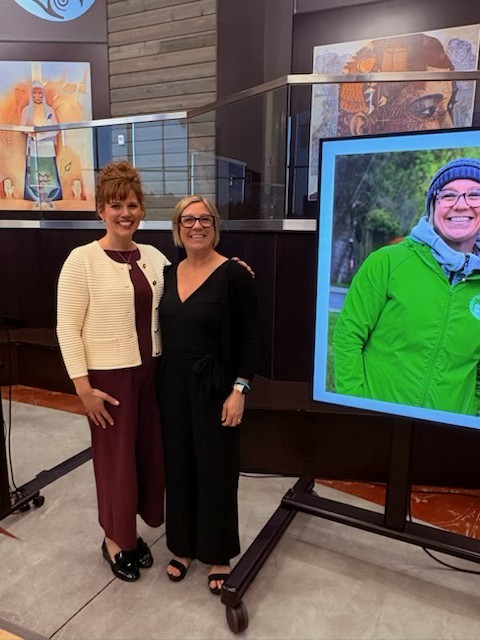
Megan Vining, Recreation Manager at Pullman Parks & Recreation, won the Leader of Distinction Award in the community partner category. Megan has spent more than 25 years building powerful university-community partnerships, mentoring and supervising over a thousand WSU students, and leading with a collaborative, service-driven approach that enriches the Pullman community.
Daphne Starrett from Boost Collaborative and Sierah Beeler from Humane Society of the Palouse both won a Provost’s Award for Leadership in the community partner category.
I had a great time keeping score for 6th Grade Girls' Intramural Basketball at Lincoln Middle School! I always really enjoy the opportunity to be able to volunteer at Lincoln with basketball, as basketball is a sport that means a lot to me, and it's great seeing the next generation enjoying it as well. Richard Wolf, WSU Pullman
It was interesting to see a teacher work at a higher level and how much more freedom the students are given. I feel as though I gained ideas on how I want to run my future classroom. Ayla Silvonen, WSU Pullman
Every day I am connecting with families and delivering lunches to the community. It is very rewarding. Amee Bangsund, WSU Global
I lead a Wellbriety Group at Recovery Cafe' in Kelso Washington. This group's focus is on indigenous peoples and beliefs around wellness, recovery and service to the community. We serve those who need support with employment, poverty , homelessness and medical/mental health concerns and access. Clifford Siltala, WSU Global
Doing the cards for seniors was honestly a different experience than I expected. At first, it seemed really simple, but I realized pretty quickly that choosing the right words actually mattered a lot. I had to be more thoughtful about what I said so it didn’t come off as insensitive or make assumptions about their lives. That made me slow down and really think about how small messages can impact someone. One thing I noticed is that even short, simple notes can feel meaningful if they’re written in a kind and genuine way. Kayden Challender, WSU Global
It was clear that the school community values the garden space. I left feeling grateful for the experience. A chance to contribute to a space that supports learning, sustainability, and community connection ...was meaningful and worthwhile. The harsh weather didn’t take away from the experience either. I think it showed the strength of the garden and community still willing to put in the work no matter the weather conditions. Cilxusasqet Friedlander, WSU Vancouver