What is Service-Learning?
Service learning at WSU supports the university’s land-grant mission by fostering community engagement, expanding access to education, and applying knowledge to address real-world challenges across the state and around the globe. The CCE offers support to integrate service-learning and civic engagement components into courses. We work individually with faculty to provide the types and levels of support appropriate for each course and faculty.
Service-learning is a “…form of experiential education in which students engage in activities that address human, and community needs together with structured opportunities intentionally designed to promote student learning and development” (Jacoby, 1996). Service-learning is a teaching strategy used to advance academic learning through civic engagement.
Service-learning can be integrated into any class in any discipline, allowing students to apply academic concepts to real-world community challenges across all fields of study. The CCE is always seeking new partnerships with faculty across all disciplines.
Faculty
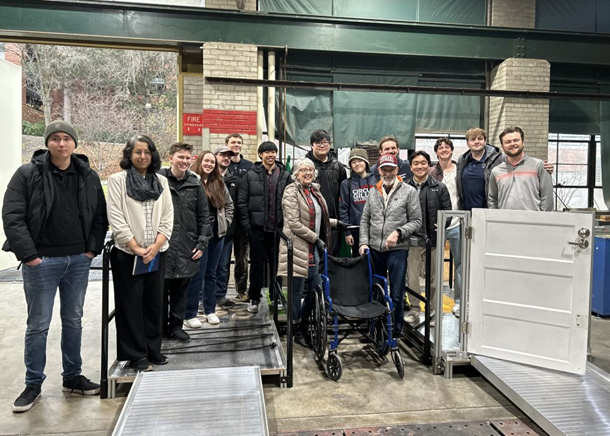
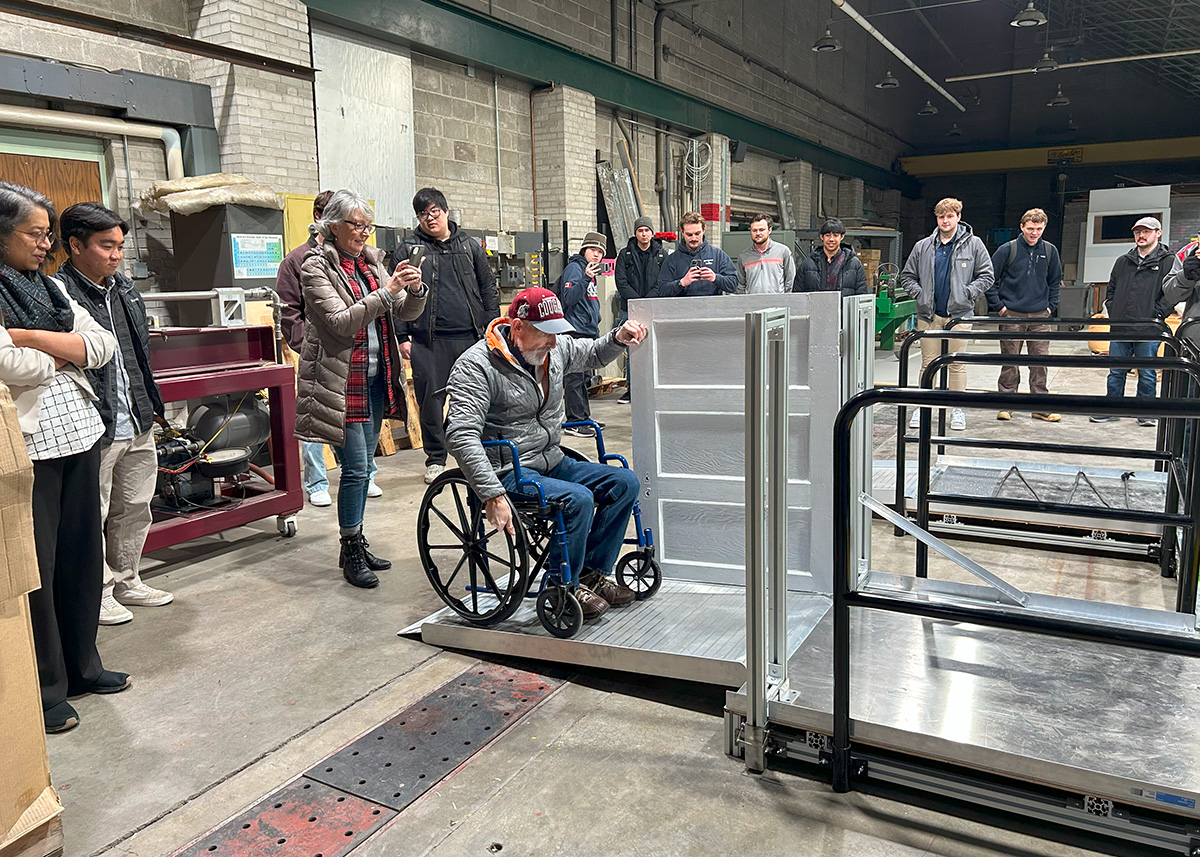
Service learning helps faculty attract and motivate a diverse set of learners, enrich classroom discussions, and build cross-disciplinary networks. It fosters stronger ties with local communities, supports research and publication opportunities, and encourages broader engagement across WSU. Faculty can also gain recognition for impactful teaching and meaningful communtiy partnerships through the Center for Civic Engagement (CCE)
Students
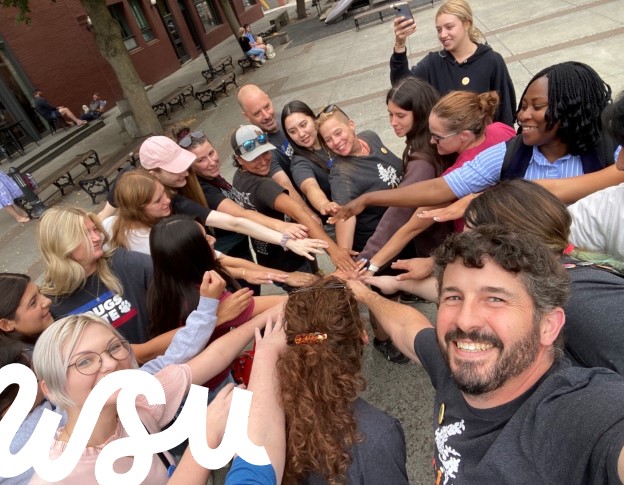
Service-learning boosts student retention, motivation, and academic performance. It provides hands-on experience, helps apply course content in diverse ways, develops critical thinking skills, and builds professional networks—all of which enhance resumes and support future career opportunities.
Community Partners
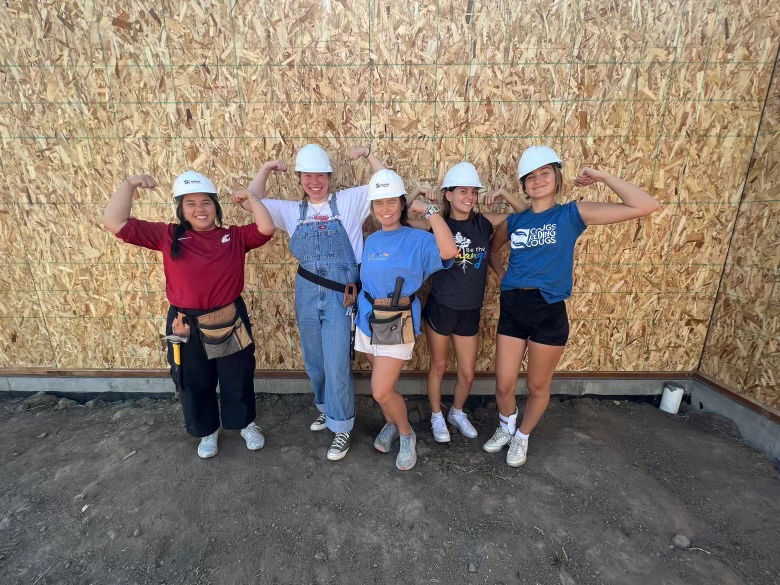
Service learning provides agencies with additional support to meet their goals, while students contribute fresh energy and creativity. It fosters connections with WSU and other organizations, raises awareness of community issues, encourages future civic involvement, and partners to help educate and shape future leaders.
Student Success and Retention
The Center for Civic Engagement (CCE) partnered with Biology 102 in AY18 and AY19, with half of the lab sections incorporating service-learning experiences - structured community-based projects organized by the CCE, including orientation and reflection - while the other half proceeded with the traditional curriculum. This study demonstrates the many benefits a short service-learning intervention can have on student retention and academic success and supports the value of providing first-year students with even just one service-learning experience. Relative to controls, students who completed a SL project achieved higher academic performance, with end-of-semester class grades 9.7% higher and a 9.9% boost in end-of-semester GPAs. In addition, fall-to-fall retention was 9.3% higher for service-learning than for control students. Approval for our study was granted by WSU’s Institutional Review Board, and funding was provided via the Provost’s Student Success Seed Grant Program.
Partners in Innovation: Faculty Recognition
The Center for Civic Engagement and Office of the Provost recognizes faculty and staff for their innovative community engaged learning practices that create transformative and high-impact opportunities for students and communities. Community and student engagement are strategic priorities of Student Affairs and Academic Affairs at Washington State University.
WSU Definition of Community Engagement
We define community engagement as a relationship-based collaboration between Washington State University faculty, staff, and students and local, tribal, state, national, and global partners for the mutually beneficial, sustained exchange of knowledge and resources. Community engagement builds deep, trusted relationships with partners to collaboratively enrich scholarship and research, enhance curriculum and teaching, disseminate programs and practices, prepare engaged and educated citizens, and address critical societal issues to contribute to the public good.
- Curricular engagement describes the teaching, learning, and scholarship that engages faculty, students, and community in mutually beneficial and respectful collaboration. Their interactions address community-identified needs, deepen students’ civic and academic learning, enhance community well-being, and enrich the scholarship of the institution.
- Co-curricular engagement describes structured learning that happens outside the formal credit academic curriculum through training, workshops, and experiential learning opportunities. Co-curricular engagement requires structured reflection and connection to academic knowledge in the context of reciprocal, asset-based community partnership